Rencounter Krav Maga Summer Camp 2021
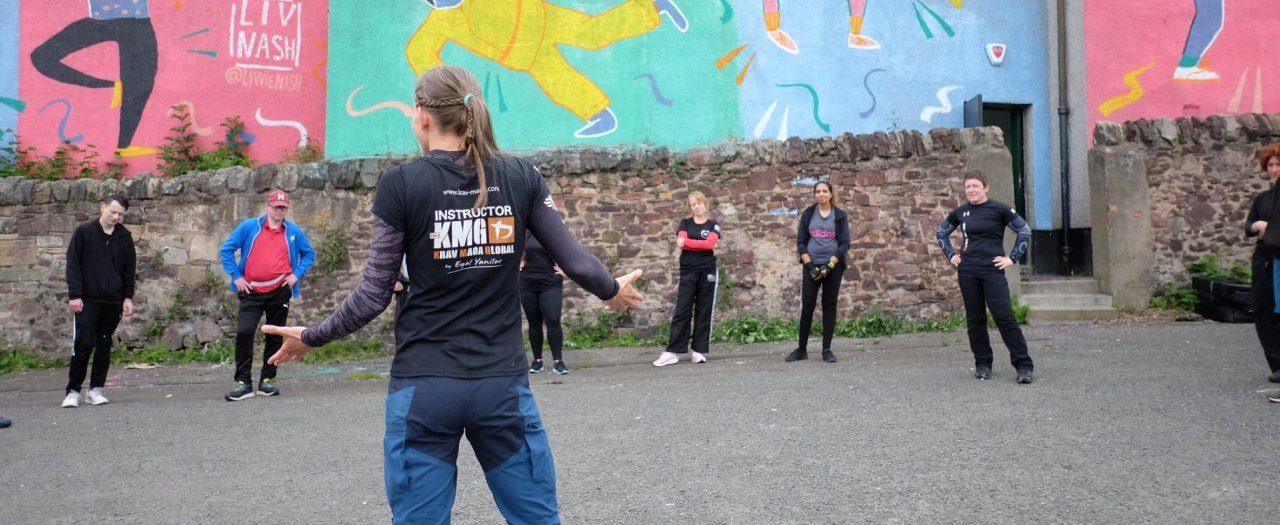
The summer camp is back!
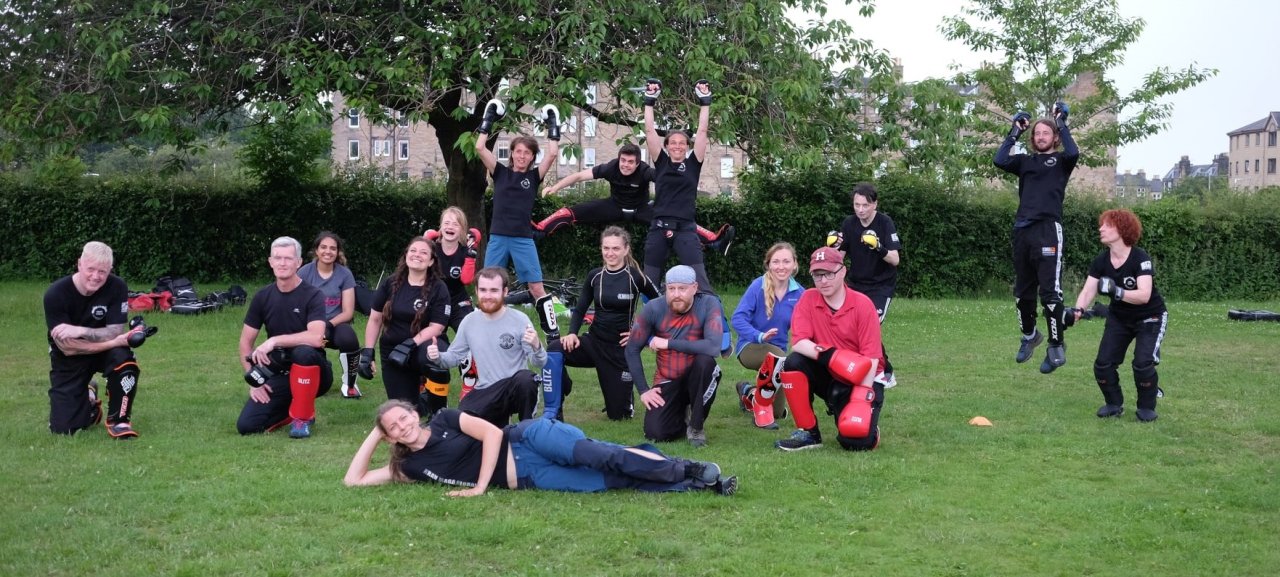
The RKM summer camp is an annual tradition we've had straight from the start of the school in 2015. After skipping 2020 because of the pandemic, I'm very happy we were able to run the camp this year. This year's theme was: Fight camp.
It was great to see the development people had this weekend, in many different ways. I think and hope that we achieved a good balance between challenge and laughter, pushing ourselves and having fun.
This was a weekend of expanding comfort zones, expanding perspectives, and pushing through different kinds of barriers. Different things are challenging for different people, and I think we hit on something for everyone to work on and grow.
After a long year of social distancing and limited social interaction, it was great to also have the time in between training for people to sit and chat, having the time to talk to people and not just trying to hit them all the time :-) We have a really good community that I’m very proud of - welcoming, supportive, and a good group to be a part of.
Goals
My overarching goal for the weekend was to approach fighting ability and capacity from as many angles as possible: technically, tactically, physically, mentally, and emotionally - pushing at all the things that expand our options and capacity to act in a self-defence situation.
Here are some of the things we worked on:
Adaptability, affordances, and “gifts”
An underlying theme in many of the exercises was the ability to adapt to new and changing situations.
If we understand the principles we can adapt to solve problems that we haven’t practiced before.
One of the goals for the camp was to broaden understanding of the underlying principles that make different techniques work. If we understand the principles we can adapt to solve problems that we haven’t practiced before, even if we’ve never learned the specific “optimal” technique for a specific attack. The same physics apply.
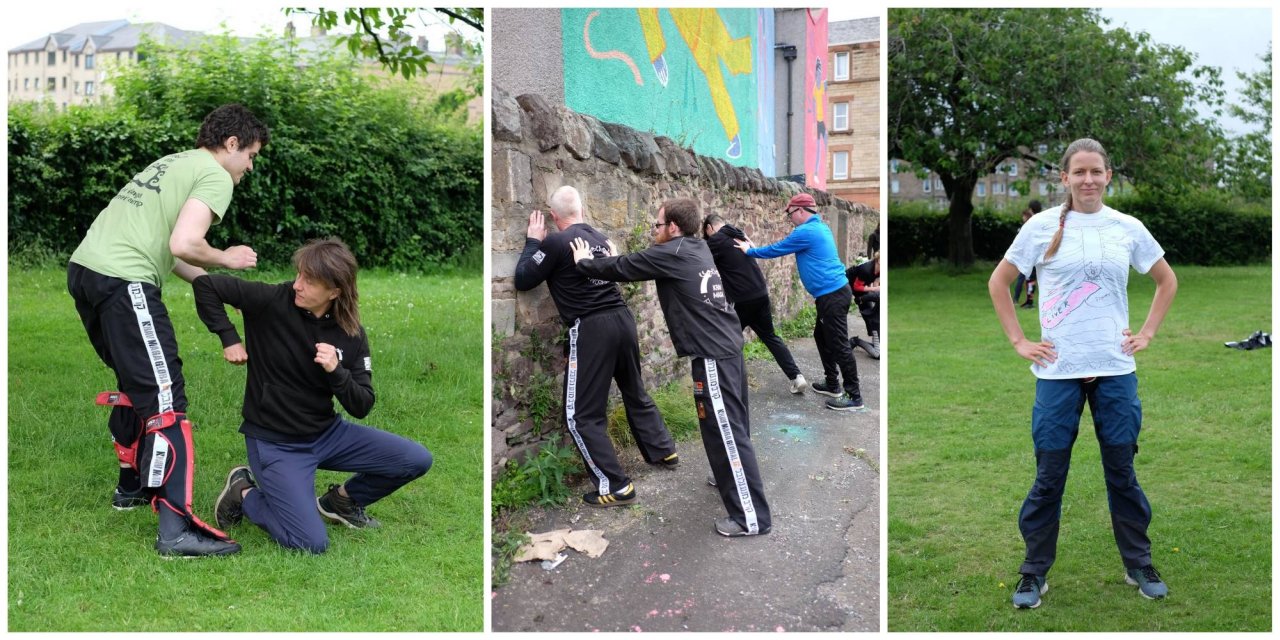
Another part of adaptability is the concept of affordances: How we see an object, person, or situation determines what we can do, how we can interact with the world. Expanding our affordances expands our options. Our brain is our most powerful self-defence tool.
We played with the environment, to be aware of challenges it can pose, but just as much the opportunities and “gifts” it can provide - Gifts are anything that we can use to improve our situation or make things worse for the attacker, whether it's an object, a target that presents itself, or anything else that we can use. Also, some moves or techniques don't make sense in a self-defence situation if you try to set it up, too much complexity and chaos, but if the opponent and chance sets it up for you, they can be very effective and a gift to take advantage of. But we can only use these things if we can see them.
This part of the training involved a lot of slow motion drills, to give us time to notice things that we otherwise wouldn’t, as well as allowing us to safely do things that would lead to broken bodies at high speed. Starting with the assumption that the attacker has a size, strength, or numbers advantage, may be armed, and gets the first move, we need to use every advantage we can get. Gravity and hard edges or pointy corners are powerful force multipliers.
Thinking about these things can make people twitch a bit. It’s icky. It can bring out a question that may stay in the back of people’s minds a lot of the time, but which we should all be considering in our training: Am I willing to actually do this to another human being if I have to? And the more effective the use of violence is, the more likely that you’ll have a hard response.
Internal permissions, legal & ethical
We talked about the legal and ethical of self-defence - being clear on what we are legally allowed to do, how do you judge that in the situation, and thinking through our own internal guidelines and permissions ahead of time - How do we want to act in different situations. How do we allow ourselves to act? What are the internal guidelines that we are trying to follow?
If we aren’t clear on our internal limits and permissions beforehand, it can trip us up in the moment, making it more difficult to act, more likely to freeze harder, and it can affect how we deal with the aftermath afterwards.
For most people, the physical movements are actually the easy part. Overcoming the internal mental barrier to using violence is the hard part.
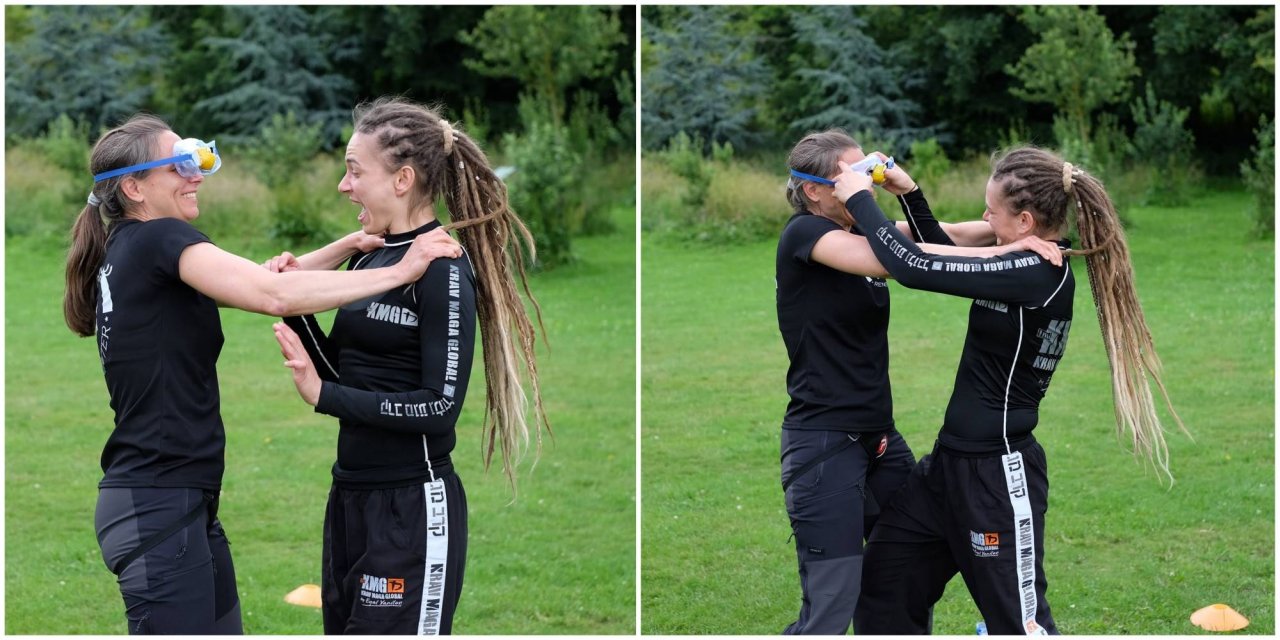
Eye-gouging is one of the dirty tricks krav maga is known for. This is does not require a lot of physical strength or training, but mentally it is much more difficult - we don't like to touch people's faces, and there's definitely something unpleasant and squishy about eyes.
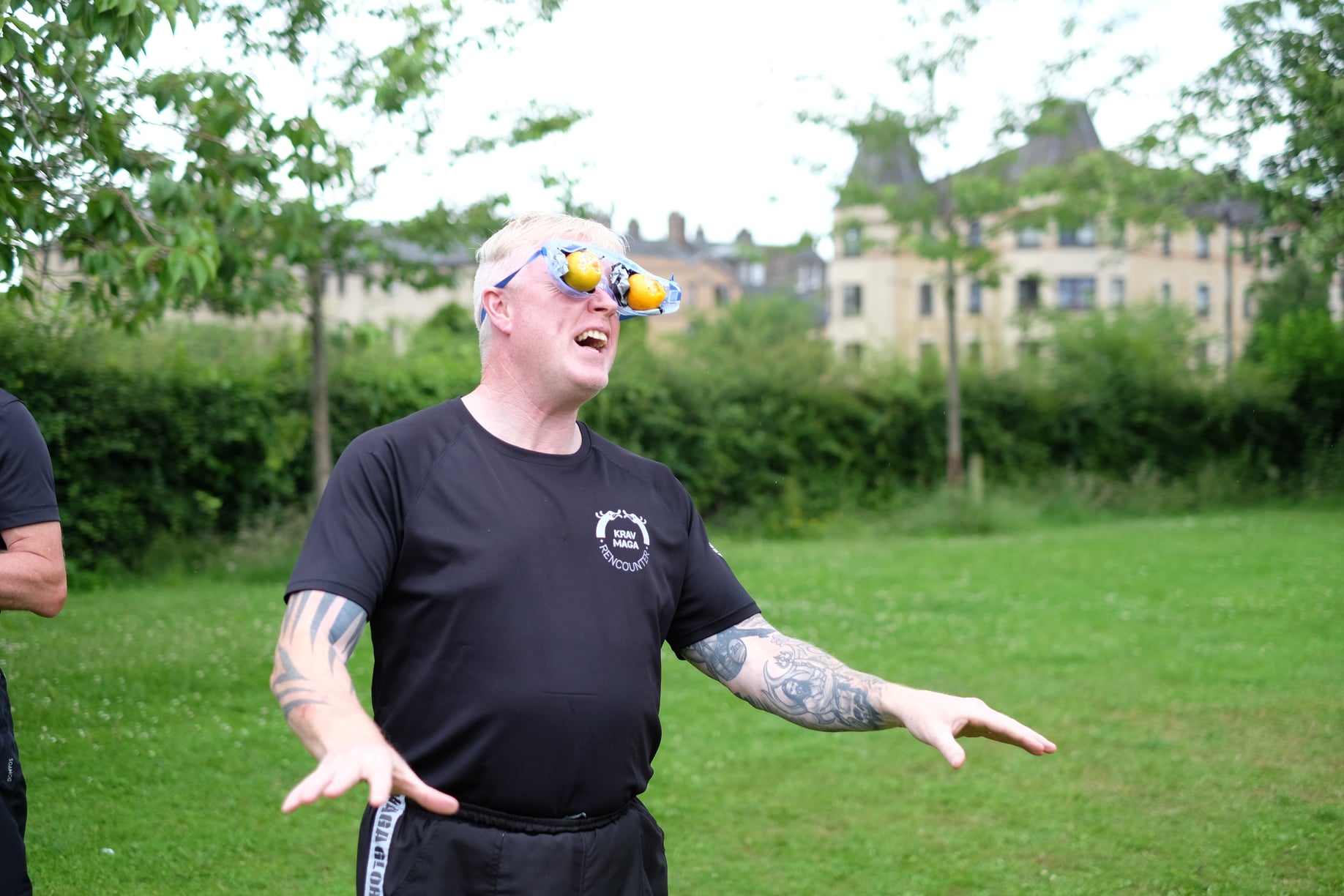 Satsuma goggles, for practicing eye-gouging, complete with that squishy feeling
Many people have a deep resistance to using violence effectively, even though it’s for the purpose of self-defence. Because of that we tend to unconsciously find ways around it in training, to align with our internal ideas of “fairness” and suchlike. Add to that the influence of kickboxing and other fighting sports, what we often end up with is a competition mindset.
In competition there’s rules, a sense of “sportsmanship”, not using dirty tricks etc.. In a self-defence situation, the assailant will not be playing by those rules. If we do, we're adding disadvantages for ourselves in an already bad situation.
After the first half day of training I asked how many had had their hair grabbed so far. Answer: Zero. We all tend to be too nice.
It’s an unspoken rule. Social norms, learned blindness. Don’t touch the hair. Also following a long period of training with varying covid restrictions on top of that, things like grabbing hair or clothes is additionally strange and unfamiliar.
But you have this easily accessible powerful control mechanism, and you don’t use it? We have to make it a conscious part of our training to change our frame of mind on these things.
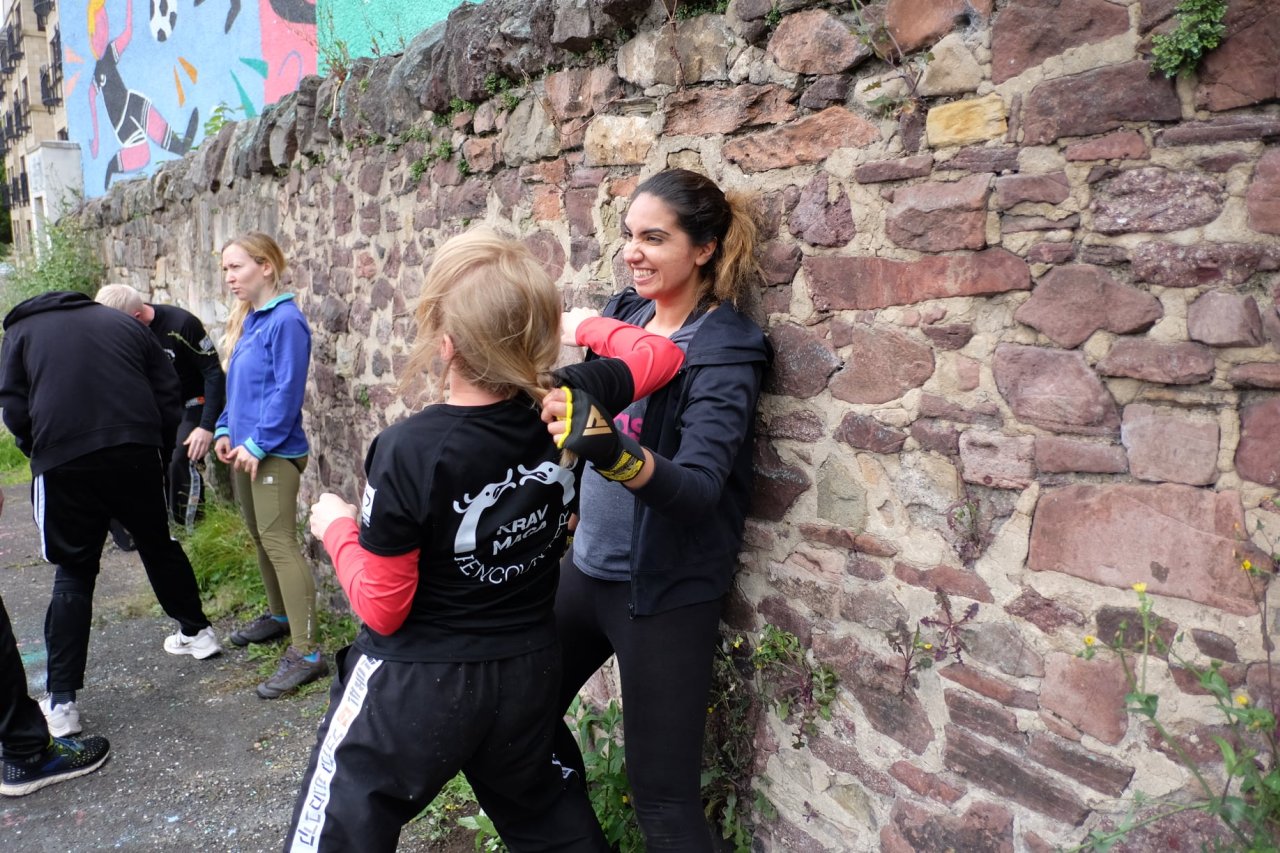
So we spent a fair bit of time on drills focused on developing a “hunting” mindset rather than a competition mindset. Looking for the fastest way to end the situation, from whatever position we find ourselves in.
Hitting and getting hit
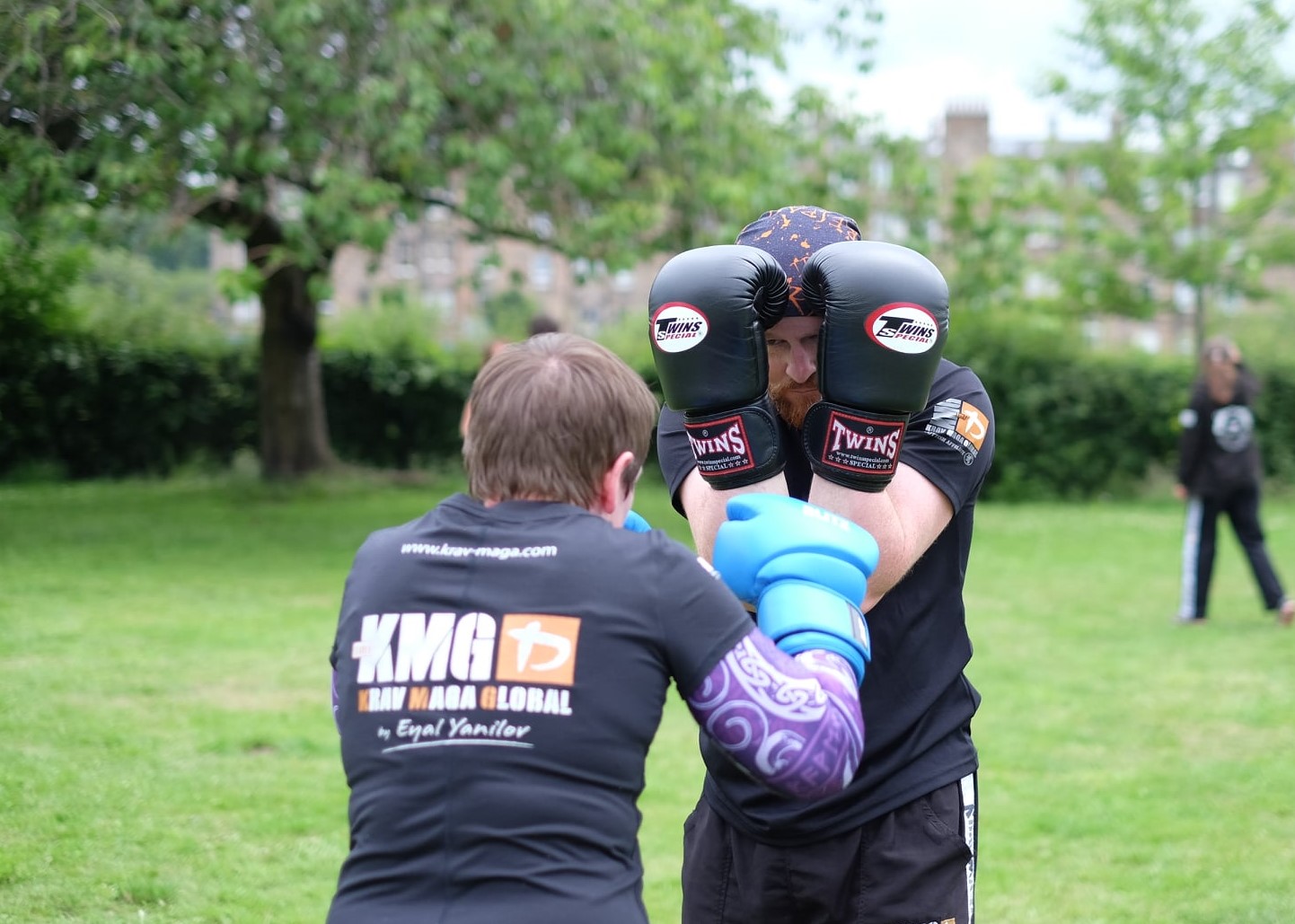
We worked on getting used to getting hit and absorbing some of the impact of a strike. Being able to take a hit and keep going is an important element for physical self-defence. A big part of the debilitating effect often comes from the shock as much as from the actual physical effects of the strike or even a stab itself. If the mind is overwhelmed, the body won’t be able to keep fighting.
“I can take harder hits than I thought”.
Building up impact gradually we can take away some of the fear, as we see that our body can actually take harder hits than we thought. Naturally we can’t safely re-create the shock or impact of a real attack intended to do harm, but we can make sure that we start from a higher baseline. A number of people mentioned this as a key takeaway from the day: I can take harder hits than I thought.
Contact and control
On the other side of striking, many people are afraid to hurt their training partner and are overly careful as a result, not actually making contact with their strikes. While this comes from a good place, it’s not helpful to our training, for ourselves or our partner. We don’t want to injure or overwhelm our training partner, but if we are being too “nice”, we are not helping them learn. We need to practice being at the correct range for effective strikes, and our partner needs to practice defending against attacks that can actually reach them. Immediate and accurate “feedback”, a light hit, helps your partner gauge the range of your strikes, and instantly know whether their defences worked or not.
A lot of people visibly got much more comfortable in making contact with their strikes. This also showed immediate improvements in striking from the right range, as well as giving “feedback” to their partners on the effectiveness of their defences.
When we move to the dynamic and chaotic environment of sparring, we need both the ability to take hits, and to make contact with control.
I believe there's a lot of benefit in building up speed and impact gradually. If you do too much too soon you end up being more scared of getting hit rather than less scared, or more afraid of hitting others, and then you need to do more work to undo that.
With good control and good communication we can work at higher levels of intensity.
FUNdamental
(I know, it's bad, I made myself groan there)
Last but not least, a key goal for the weekend was to have FUN. Having fun is an essential ingredient for good training. When we also have fun we learn more, we can train for longer, and at a higher intensity, and get a lot more out of it.
We talk about determination a lot in krav, and we have that idea of expanding our comfort zone and pushing through. This can be really powerful, building resilience and confidence, step on step. But also, we don’t do ourselves a service pushing too hard. We can push through discomfort, but we don’t want to push through to injury.
The same principles apply as for lifting weights: increase the load gradually, and vary the load, if you add too much load too soon you get injured, and if you always lift the heaviest weights possible you’re progress will slow down. Rest and recovery in between is an essential part of the process.
I believe the best place to spend most of our training time is in the zone where we get challenges, and also have fun. Now and then it’s worthwhile to go harder, into the upper range of our manageable levels of overwhelm, but I believe this is best kept to a small part of training, and always with an eye on what the goal is.
It doesn’t have to be gruelling all the time to make the “gainz”. Most of the time, aim to have fun.
That's it for this year!
I hope everyone took good experiences, memories, and learning away from the camp. I really enjoyed teaching it with the support of the whole RKM instructor team, and you all contributed to making it a great experience.
I'm proud of the effort you all put in and the supportive and welcoming atmosphere that's created by everyone in this group. It really reminds me, yet again, of how much I love our club and the community in it.
Keep on being awesome!
Kida!
Linn